

Plasterboard in a Skip Bin: What Homeowners Must Know
Brett Taylor en plasterboard in skip bin
Plasterboard cannot go into a mixed general waste skip. That is the short answer. Gypsum-based drywall must be kept separate from other demolition debris, and most skip operators will reject or surcharge a mixed load if they find it at the depot. Before you book anything, run through these three steps:
- Tell your supplier upfront that you have plasterboard and confirm in writing that they accept it.
- Segregate and contain boards away from general waste, keeping them dry and stacked flat.
- Book a dedicated gypsum collection if your volume exceeds a couple of sealed bags.
As a short caution: mixing plasterboard with biodegradable waste can generate hydrogen sulfide gas in landfill conditions, which is why regulators treat it as a separate waste stream. Contamination fees can be significant, and any board from a pre-1980s property carries an asbestos risk that requires testing before disposal.
Pro Tip: Get your supplier’s acceptance confirmation in writing before the skip is delivered, not after. A verbal “yes” on the phone does not protect you from a contamination surcharge at the depot.
Key Takeaways
Plasterboard must be kept separate from general waste in any skip, and getting written supplier confirmation before delivery is the single most important step to avoid contamination fees and rejected loads.
| Point | Details |
|---|---|
| No mixing with general waste | Gypsum drywall must be segregated; mixed loads risk rejection or contamination surcharges at the depot. |
| Keep boards dry and clean | Wet or heavily contaminated boards may be refused even by dedicated gypsum skips. |
| Get written confirmation | Ask your supplier to confirm acceptance, tipping site, and fee structure in writing before delivery. |
| Pre-1980s boards need testing | Older plasterboard may contain asbestos; arrange a professional survey before any removal work. |
| Localskipbinhire simplifies booking | The postcode-matched platform shows accepted waste types and all-in pricing upfront, removing the guesswork. |
Table of Contents
- Can you put plasterboard in a skip bin, and what does the law say?
- Why plasterboard is handled differently than ordinary demolition waste
- Which container types and waste streams will accept plasterboard?
- How to prepare your plasterboard load for collection
- What does a plasterboard skip cost, and do you need a permit?
- What are your alternatives if a skip won’t work?
- What to ask your skip supplier before you book
- How Localskipbinhire makes compliant plasterboard collections straightforward
- The mistake that costs renovators the most money
- Sources
Can you put plasterboard in a skip bin, and what does the law say?
The general U.S. regulatory position is that gypsum-based waste, including standard drywall, is not classified as hazardous under federal rules, but it is treated as a separate waste stream by most state environmental agencies and county transfer stations. The Environmental Protection Agency (EPA) distinguishes between clean gypsum drywall and contaminated drywall, and many states have their own construction and demolition (C&D) debris rules that restrict or prohibit gypsum from entering mixed landfill cells.
Before you book a skip or dumpster, check these local sources:
- County or city public works department: Ask whether gypsum drywall is accepted at local transfer stations and whether it must be delivered separately.
- State environmental agency: Look up your state’s C&D debris regulations. States like California, Massachusetts, and Connecticut have specific drywall diversion requirements.
- Transfer station or materials recovery facility (MRF): Call the facility directly and ask for their acceptance criteria, tipping fees for gypsum, and whether clean boards must be separated from painted or coated boards.
- Your skip or dumpster supplier: Ask for the tipping site address and confirm that site accepts gypsum. Get the answer in writing.
Your regulatory checklist before booking should cover: written acceptance policy for gypsum, the name and address of the tipping site, any per-ton surcharge for specialist handling, and the contamination penalty if gypsum is found mixed in a general load.
Why plasterboard is handled differently than ordinary demolition waste
That chemistry is harmless in isolation, but when gypsum contacts biodegradable organic material in an anaerobic landfill environment, it reacts to produce hydrogen sulfide gas. Hydrogen sulfide is toxic, corrosive, and carries a distinctive rotten-egg odor that can affect neighboring properties and workers at the tipping site. That single chemical reaction is the reason regulators and skip operators treat gypsum as its own waste stream rather than lumping it with timber, plaster, and general rubble.
The practical consequences for you are straightforward:
- Mixed loads containing gypsum may be refused at the depot or sent to a specialist facility at extra cost.
- Contamination fees are charged back to the customer, not absorbed by the operator.
- Clean, dry, uncontaminated boards are far easier and cheaper to recycle than boards mixed with adhesive, tile, or heavy paint coatings.
Pro Tip: Boards contaminated with ceramic tiles, heavy adhesive, or plastic coatings may be refused even by dedicated gypsum skips. Strip fixings and separate contaminated sections before loading.
One more risk worth flagging: plasterboard installed before approximately 1980 may contain asbestos fibers, particularly in textured coatings or joint compounds. If you are stripping out older walls and are unsure of the board’s age or composition, arrange a professional asbestos survey before any removal work begins. Asbestos-containing material requires licensed disposal and cannot go into any standard skip.
Which container types and waste streams will accept plasterboard?
According to industry guidance, plasterboard cannot be placed in a general waste skip. Your practical options fall into four categories, and the right one depends on your job size and site constraints.
Dedicated gypsum or plasterboard skip. This is the cleanest solution for anything beyond a small DIY patch. The skip is lined or designated for gypsum only, taken to a facility that recycles or processes the material separately, and priced accordingly. For full-room or multi-room renovations, a dedicated skip in the 4–8 cubic yard range is the most efficient and compliant choice.
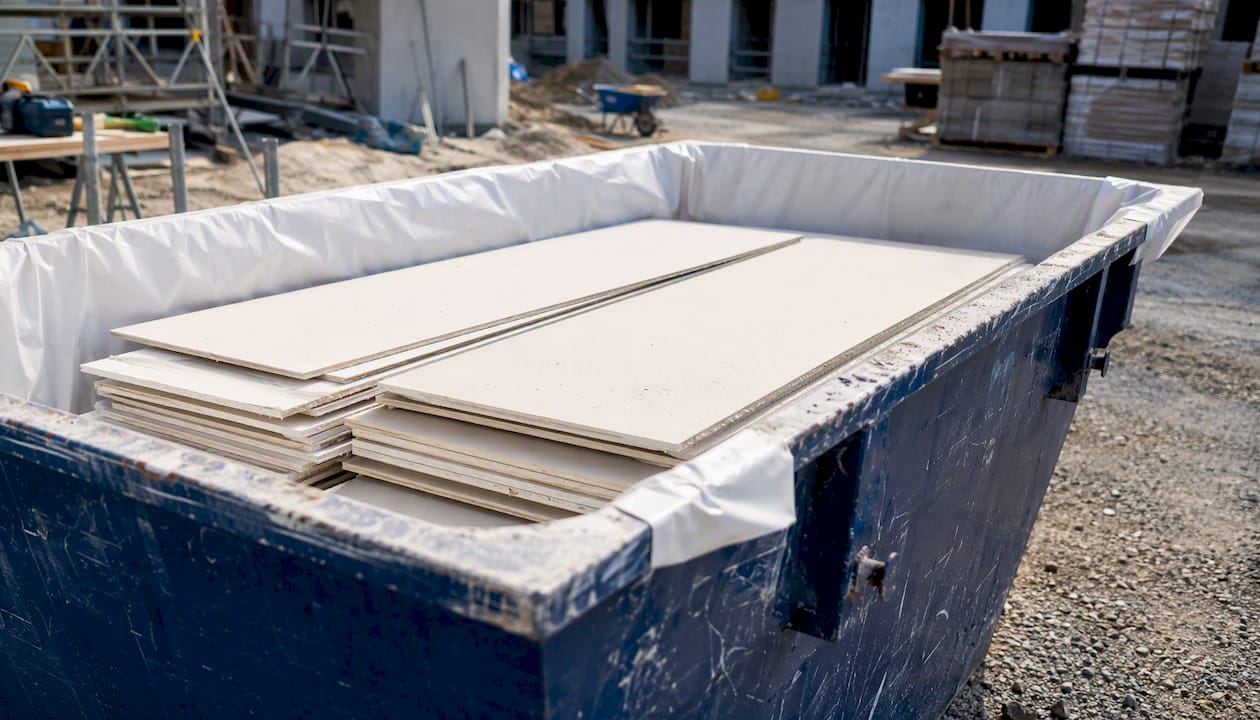
Sealed heavy-duty bags on a mixed skip, by prior arrangement. Some operators will accept a small number of sealed bin bags of plasterboard placed clearly on top of a mixed load, but only if you arrange this before delivery and the bags are visible and labeled so depot staff can confirm segregation. This option suits very light domestic DIY quantities only.
Municipal transfer station or recycling center drop-off. Local recycling centers may provide a dedicated route for clean plasterboard, but acceptance criteria, tipping fees, and opening hours vary by location. Call ahead and ask specifically about gypsum drywall.
Roll-off dumpster with a gypsum-only designation. For larger commercial strip-outs, some waste haulers offer roll-off containers designated for C&D gypsum. Confirm the tipping site accepts the material before booking.
A 4 cubic yard skip typically handles a single-room strip-out; a 6–8 cubic yard container suits a multi-room renovation.
| Option | Best for | Key condition |
|---|---|---|
| Dedicated gypsum skip | Medium to large renovations | Book in advance; confirm tipping site |
| Sealed bags on mixed skip | 1–2 bags of offcuts only | Must be pre-agreed and bags placed on top |
| Transfer station drop-off | Small DIY volumes | Call ahead; fees and rules vary locally |
| Roll-off dumpster (gypsum-only) | Large commercial strip-outs | Confirm facility accepts gypsum C&D |
How to prepare your plasterboard load for collection
Getting your load accepted without extra fees comes down to preparation before the skip arrives, not after it is full. Follow this sequence:
- Keep boards dry. Wet gypsum is heavier, harder to process, and more likely to be rejected. Cover stored boards with a tarpaulin if they are outside.
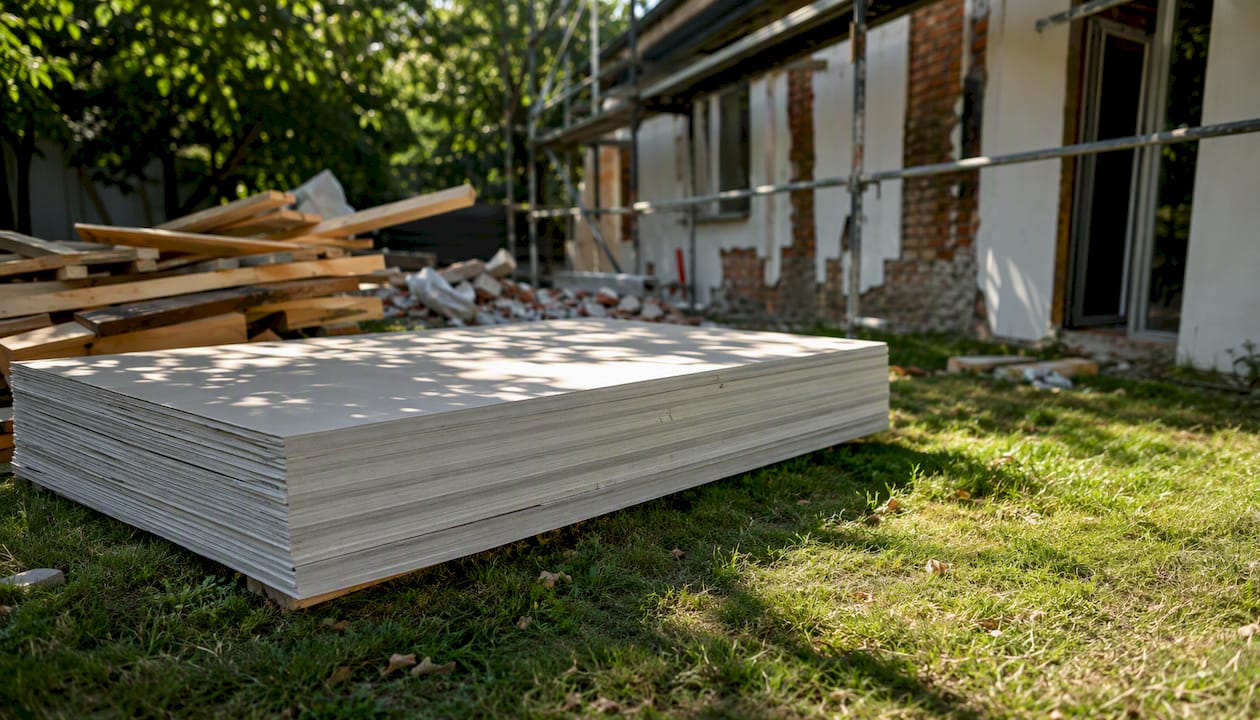
- Stack flat. Lay sheets horizontally rather than leaning them against the skip walls. Flat stacking reduces breakage and makes the load easier for depot staff to inspect.
- Remove metal fixings. Pull out screws, nails, and metal corner beads before loading. Metal contamination can damage processing equipment at the recycling facility.
- Separate contaminated sections. Cut away or set aside sections with heavy tile adhesive, thick paint coatings, or plastic vapor barriers. These may need a different disposal route.
- Bag small offcuts. Place small pieces and dust in heavy-duty bags, tie them securely, and place the bags on top of the load where they are clearly visible.
- Label the load. If your supplier requires it, mark the bags or the skip with “gypsum/plasterboard only” so depot staff can process it without delay.
Pro Tip: Cover the skip with a tarpaulin overnight or during rain. A load that arrives at the depot wet and heavy may attract a surcharge or a partial rejection, even if the material itself is clean.
Segregation planning from day one saves the most time. As you strip out walls, stack plasterboard in a separate pile immediately rather than mixing it with timber and rubble. Sorting a mixed pile later is slow and risks contamination.
What does a plasterboard skip cost, and do you need a permit?
Cost depends on skip size, your location, the tipping site’s processing fees, and whether any specialist handling applies. The table below shows the main cost drivers to ask about when comparing quotes.
| Cost driver | What to ask your supplier |
|---|---|
| Base hire fee | What does the quoted price include (delivery, collection, disposal)? |
| Weight allowance | What is the included tonnage limit, and what is the per-ton surcharge above it? |
| Specialist handling fee | Is there an additional charge for gypsum or C&D drywall processing? |
| Contamination penalty | What is the fee if non-gypsum waste is found in the dedicated skip? |
| Permit fee | Is a street placement permit included, or is that charged separately? |
To get a genuinely comparable quote from two suppliers, ask each one the same five questions above. A quote that looks cheaper may exclude the specialist handling fee or set a lower weight allowance that triggers a surcharge.
Street placement permits. If the skip must sit on a public road or sidewalk rather than on private property, most U.S. municipalities require a right-of-way or encroachment permit from the city or county public works department. Lead times vary from 24 hours to two weeks depending on the jurisdiction, so apply early. Some skip suppliers handle the permit application on your behalf; confirm this before booking. The permit fee is typically separate from the skip hire cost.
For small domestic jobs, sharing a dedicated plasterboard skip with a neighbor doing similar renovation work can cut the per-job cost significantly, provided both loads stay clean and dry.
What are your alternatives if a skip won’t work?
Not every job needs a skip. A short decision flow helps you pick the right route:
- Small DIY offcuts (a few sheets or less): Take clean boards to your nearest transfer station or municipal recycling center. Call ahead to confirm they accept gypsum drywall and ask about tipping fees.
- Medium volumes (one room, roughly 10–20 sheets): A dedicated small skip or a scheduled single-item collection from a specialist gypsum recycler is usually the most cost-effective option.
- Large commercial strip-outs: A dedicated roll-off container or a full plasterboard skip with a confirmed gypsum tipping site is the compliant choice.
Your specific alternatives include:
- Local transfer station drop-off. Many county facilities have a designated C&D bay that accepts clean drywall separately. Fees are usually charged by weight.
- Specialist gypsum recycling services. Some regional waste companies offer scheduled collections specifically for drywall, often at a flat rate per load. Search for gypsum recyclers in your state.
- Managed marketplace collections. A waste-type matched booking platform can connect you with local suppliers who already have confirmed gypsum tipping arrangements, removing the need to verify each supplier yourself.
- Reuse and donation. Clean, uncut offcuts in good condition can sometimes be donated to Habitat for Humanity ReStores or similar building-material reuse programs. This works only for genuinely clean, dry, undamaged sheets.
Paint and paint tins with residues follow a different rule entirely: paint is generally classed as controlled or hazardous waste and cannot go into any skip, including a dedicated gypsum skip. Use a single-item collection service or a household hazardous waste (HHW) drop-off event for paint disposal.
What to ask your skip supplier before you book
Getting the right answers before the skip is delivered protects you from rejected loads and unexpected charges. Ask every supplier these questions:
- Do you accept gypsum drywall, and is it handled as a separate waste stream?
- What is the address of the tipping site, and does that site have a gypsum processing bay?
- Is there a specialist handling fee for plasterboard, and is it included in the quoted price?
- What is the weight allowance, and what is the per-ton surcharge if I exceed it?
- What is the contamination penalty if non-gypsum material is found in the skip?
- Will you provide written confirmation of acceptance before delivery?
Red flags to watch for:
- The supplier cannot or will not name the tipping site.
- The fee structure is vague (“we’ll assess on collection”).
- The supplier is reluctant to confirm acceptance in writing.
- No mention of a weight limit or per-ton surcharge.
When you call to book, use clear, specific language. A sample script:
- State the volume: “I have approximately [X] full sheets of standard gypsum drywall from a [single-room/multi-room] renovation.”
- Ask for confirmation: “Can you confirm in writing that your skip accepts gypsum drywall and the tipping site processes it separately?”
- Confirm the fee structure: “Please include the specialist handling fee, weight allowance, and contamination penalty in the written quote.”
A supplier who answers all three points clearly and promptly is one you can trust. One who hedges on the tipping site or the fee structure is a risk.
How Localskipbinhire makes compliant plasterboard collections straightforward
Sorting out a compliant gypsum collection on your own means calling multiple suppliers, verifying tipping sites, and chasing written confirmations. Localskipbinhire cuts that process down to a single postcode search.
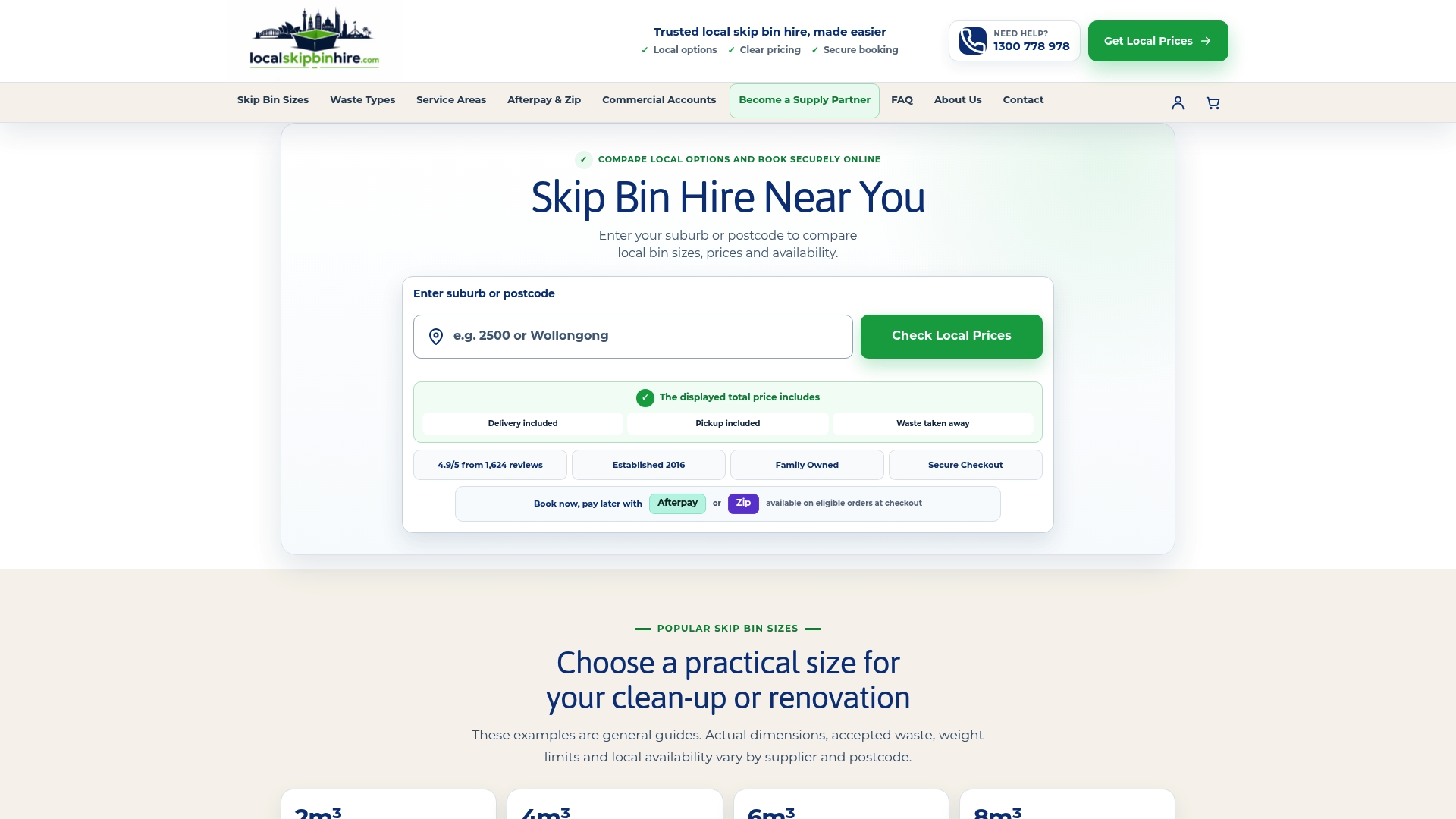
The platform matches you with local suppliers who already list their accepted waste types, tipping sites, and all-in pricing, so you can see upfront whether a supplier handles gypsum drywall before you book. Delivery, collection, and disposal costs are included in the quoted price, with no hidden specialist handling fees added after collection. For a single-room job, a 4m³ skip is a practical starting point; for smaller offcut volumes, a 2m³ heavy-waste bin keeps costs lean. If you need guidance on heavy waste loading, the platform’s trade-advice content walks you through it.
Compare skip options and book online to get a confirmed, transparent quote for your plasterboard collection today.
The mistake that costs renovators the most money
The most common and expensive mistake in plasterboard disposal is not the mixing itself. It is the assumption that a verbal agreement with a skip supplier is enough. A load arrives at the depot, gypsum is found mixed with timber and rubble, and the customer receives a contamination surcharge or a rejected load that has to be reloaded and rebooked. The extra cost is almost always avoidable.
The fix is simple: plan segregation from the first day of strip-out, not the last. Stack plasterboard separately as each sheet comes off the wall. That takes no extra time during demolition and saves a significant amount of sorting time later. Written confirmation from the supplier, obtained before the skip is delivered, is the second non-negotiable step. If the supplier will not confirm acceptance in writing, that is your signal to find a different supplier.
For anyone stripping walls in a property built before 1980, an asbestos survey before any removal work is not optional. Asbestos-containing material in joint compound or textured coatings is not always visible, and disturbing it without proper precautions creates a serious health and legal liability.
Sources
Use these resources to verify acceptance criteria and local regulations before you book:
- Can You Put Plasterboard in a Skip? A Complete UK Guide
- How to Dispose of Plasterboard: Safe, Legal and Easy Options
- Plasterboard, plaster and gypsum based wastes - West Sussex …
- Can You Put Plasterboard in a Skip? UK Disposal Rules Explained - Martin Skip Hire
- Can You Put Paint in a Skip? - Skip Hire - Mick George
Keep every written confirmation from your supplier on file. If a dispute arises over contamination fees, that documentation is your clearest protection.
This article is general information, not a substitute for advice from a qualified lawyer. Consult a qualified legal professional about your own circumstances before acting on anything here.
Recommended
- Renovation Waste Management: The Playbook That Saves Real Money – Local Skip Bin Hire
- Skip Bins for Builders: Running Waste Like a Line Item, Not an Afterth – Local Skip Bin Hire
- www.localskipbinhire.com
- www.localskipbinhire.com
What the published number covers, and what it does not
A plasterboard job needs two confirmations before the truck arrives, and only one of them is ever published. Here is the published half — general-waste from-prices on three live suburb pages, checked August 2026, at the small end where a ten- to twenty-sheet strip-out lands:
| Suburb page | 2m³ | 3m³ |
|---|---|---|
| Braybrook, Melbourne 3019 | $188 | $233 |
| Bowden, Adelaide 5007 | $243 | $314 |
| Seventeen Mile Rocks, Brisbane 4073 | $324 | $352 |
Those are general-waste rates. A segregated gypsum collection is priced as its own waste type in the checker, and the weight allowance, the specialist handling and any council permit for a street placement are quoted job by job — none of them appear on a list like this. So the confirmation worth having in writing names your address, the bin size and the waste stream, not just a dollar amount. Prices move; run your own postcode through the live checker.
← Older Post Newer Post →